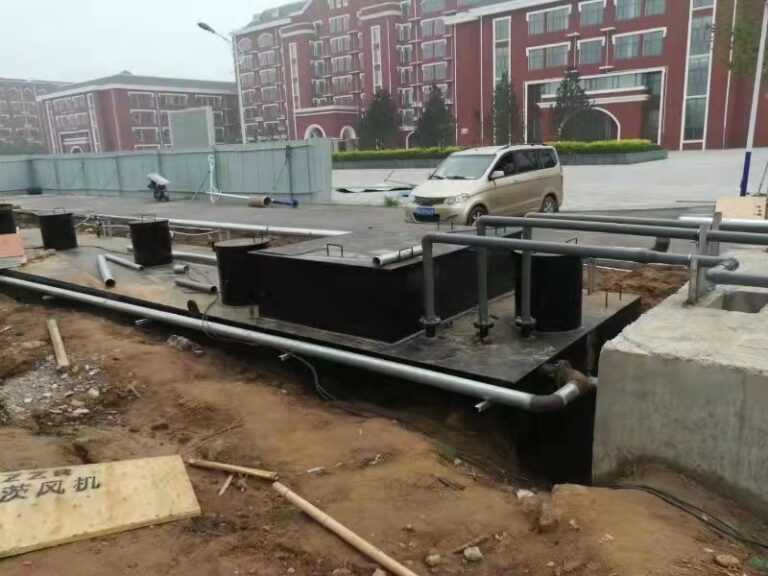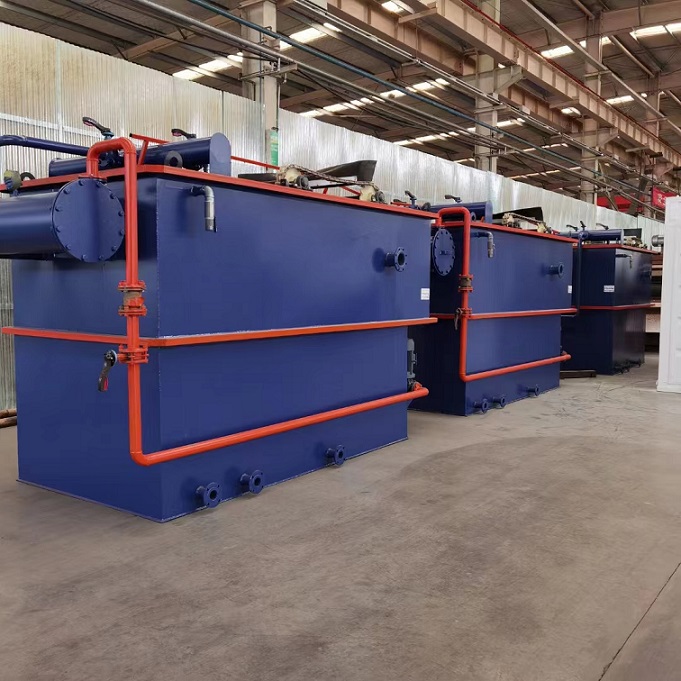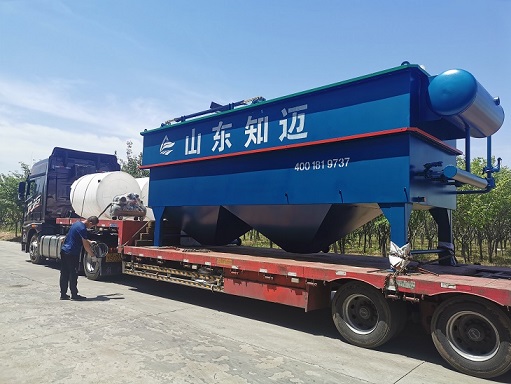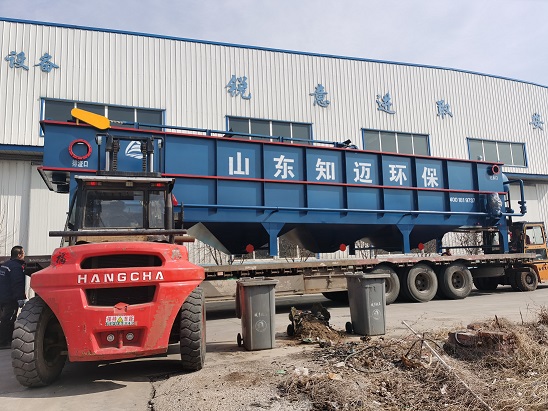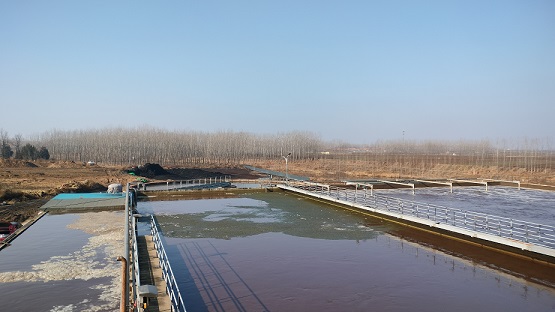
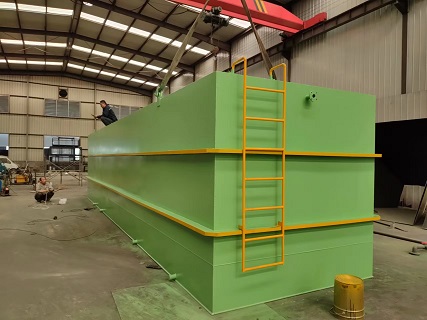
What is the process flow of an integrated wastewater treatment system?
- Pre-treatment:
Grating filtration: Sewage passes through mechanical grates to intercept suspended solids ≥5mm and fibrous impurities, preventing clogging of downstream equipment.
Equalization and homogenization: Wastewater enters the equalization tank to achieve flow balancing and water quality homogenization. - Dissolved Air Flotation (DAF): Flotation separation technology attaches bubbles to flocculated particles, forming a scum layer. A skimmer removes the scum, achieving 80%-95% removal of suspended solids.
- Sedimentation Treatment: Undissolved heavy particles enter the inclined tube sedimentation zone.
- Advanced Treatment: Equipped with filtration purification and sodium hypochlorite disinfection systems.
- Sludge Treatment: Sludge undergoes dewatering via belt filter presses.
(3) How is domestic sewage treated?
Wastewater first passes through a screen well, intercepting suspended solids ≥5mm (e.g., plastic, fiber fragments) to prevent clogging of downstream equipment.
It then enters the equalization tank to balance water quality and flow rate, where agitation devices promote grease separation by flotation.
Wastewater flows into the anaerobic tank where microorganisms decompose large organic molecules. The anoxic tank converts nitrate to nitrogen gas through denitrification.
In the contact oxidation tank, aerobic bacteria decompose organic matter into CO₂ and H₂O using the packing material as a carrier.
Using secondary sedimentation tanks or MBR membrane technology, suspended solids retention efficiency ≥99%.
Translated with DeepL.com (free version)