How does an air flotation machine work?
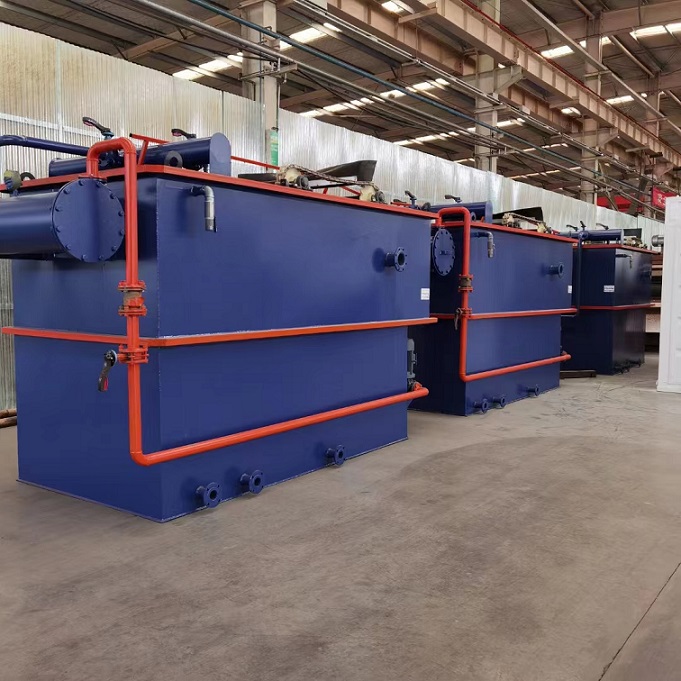
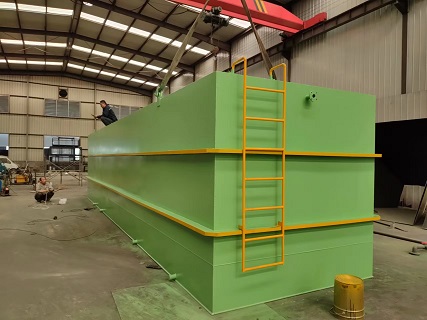
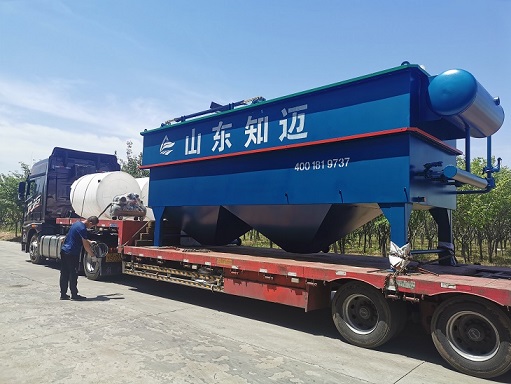
Firstly, there are many types of air flotation machines: vortex air flotation machines, shallow air flotation machines, dissolved air flotation machines, and electrolytic air flotation machines. Today, I’ll use the dissolved air flotation machine behind me as an example to explain its working principle. First, the tank here is a dissolved air tank. The dissolved air tank is a core component of the air flotation machine and is crucial for the stability of our dissolved air system. Its main function is to use a high-pressure air compressor to mix air and water to achieve a suitable ratio, thus producing dissolved air water. Under the action of the dissolved air water… Then, through the floating of water in the container, the suspended matter adheres to it. This floating action brings the suspended matter from the bottom to the surface. Then, under the action of the scraper system, the water is separated. This is the operating platform of our air flotation machine. I am standing on the operating platform of our air flotation machine. Here is the sludge scraping system. This is a key to the normal operation of our air flotation machine. Through its operation, it can separate the suspended matter that is floated by microbubbles into mud and water, ensuring the stability of our effluent. And here is our flocculation reaction zone. The reagents are… This section is where the wastewater is mixed. Through our rationally divided, SS-shaped structure, we ensure that the wastewater and chemicals are fully mixed. In front of me is the release zone. Using our stainless steel eight-claw release device, water is released from the container tank. Under the action of microbubbles, the wastewater and the bubbles are fully mixed. The rising of the bubbles causes suspended solids to float to the surface of the wastewater treatment equipment. Then, under the action of the sludge scraping system, they undergo physical separation. This is our test run station. The test run here uses a water tank of approximately 5 cubic meters. After the flotation machine is manufactured, we conduct a test run. We use a pump to pump wastewater into the equipment to simulate the flotation machine’s operation on-site. During the test run, we identify problems and make timely corrections to ensure that our equipment will not have any issues after it is delivered to the site.